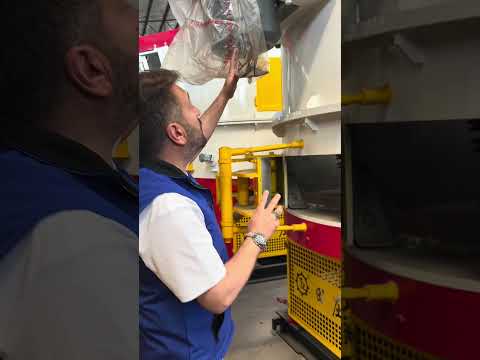
A foundry sand lab should at minimum test moisture, compactability, green compression strength, permeability and active clay (methylene blue). Those five tests catch most green-sand casting defects before metal is poured. High-output automatic lines add an online sand tester at the mixer discharge.
Why bother
Moulding sand changes every cycle. Hot return sand burns out bentonite, core sand gets mixed in, the grain distribution drifts. You cannot see it in the sand; you see it later as gas holes, burn-on, scabs and scrap. The lab is how you see it before pouring.
Green sand tests and typical values
These are common ranges for iron foundry green sand. Every plant sets its own targets for its castings, moulding machine and sand, so treat the table as a starting point.
- Moisture — Typical range: 3 - 4.5%; What it tells you: Too high: gas defects; too low: friable edges
- Compactability — Typical range: 35 - 45% (32 - 40% on high-pressure lines); What it tells you: Whether the sand is ready to mould
- Green compression strength — Typical range: 12 - 20 N/cm²; What it tells you: Mould strength in handling and pouring
- Permeability — Typical range: 80 - 150; What it tells you: How easily gas escapes
- Active clay (methylene blue) — Typical range: 6 - 10%; What it tells you: Working bentonite
- AFS clay — Typical range: 8 - 13%; What it tells you: Active plus dead clay and fines
- Loss on ignition — Typical range: 2 - 6%; What it tells you: Coal dust and organics
- AFS grain fineness — Typical range: 50 - 70; What it tells you: Surface finish versus permeability
- Sand temperature — Typical range: below 40 °C; What it tells you: Hot sand will not hold water
In daily practice compactability is the number people watch most. Moisture alone misleads: two sands at the same moisture but different clay levels behave very differently.
Equipment list
Basic green sand set:
- Sand rammer for standard specimens (three blows)
- Universal sand strength machine (compression, shear, wet tensile)
- Compactability measurement (on the rammer or a separate unit)
- Permeability meter
- Rapid moisture tester and a 105-110 °C drying oven
- Methylene blue titration kit
- Sieve shaker and standard sieve set
- AFS clay washer
- Muffle furnace at 900-1000 °C for loss on ignition
- Precision balance
For resin sand add tensile or bending specimen boxes and tester, sand temperature measurement, and LOI and acid demand value (ADV) on reclaimed sand. If you run reclamation, tracking LOI directly affects resin consumption.
Metal testing is a separate subject: spectrometer, thermal analysis and hardness belong to the melt shop lab. This guide covers sand only.
How often to test
- Moisture and compactability: hourly on an automatic line, every batch with an online tester.
- Compression strength and permeability: at least once or twice a shift.
- Methylene blue, LOI, AFS clay: daily.
- Sieve analysis: weekly, or whenever the sand supplier changes.
Keep the results in one sheet next to your scrap rate. After a few weeks you will see which number drives which defect in your own plant.
Online sand testers
An online tester takes samples automatically at the mixer discharge, measures compactability and strength, and corrects water and bentonite for the next batch. On automatic lines above roughly 30-40 moulds an hour it does not replace the lab, but it closes the gap between manual tests. Watch three things at installation: communication with the mixer control, a clean sampling point, and regular cross-checks against the lab instruments.
Buying used lab equipment
- Calibration certificate or calibration weights for the strength machine.
- Rammer drop height and weight to standard.
- Permeability meter seals and orifice set complete.
- Sieve mesh torn or loose?
- For online testers: software licence and mixer communication protocol compatible with the new line.
FAQ
Does a small foundry need a sand lab? Maybe not a full lab, but you cannot run green sand without moisture, compactability and compression strength. The equipment for those three fits on one bench.
Why is compactability more useful than moisture? Because it shows how the sand actually behaves. When bentonite and fines change, the same moisture gives different results; compactability measures that directly.
Does an online tester replace the lab? No. Methylene blue, clay, LOI and sieve analysis are still lab work. The online tester speeds up water control.
Gas holes are increasing. What should I check first? Moisture and compactability, then permeability and LOI. Too much core sand getting into the system is another common cause.
Related products and guides
- Online moulding sand test systems ZN-OTO-0001 and YONGHONG-ZXJC
- Guides: How to select a sand mixer, Resin sand reclamation, Flaskless moulding machines, Foundry quality requirements
What ZENES does
When we build a new line, the sand lab is part of the scope, and we commission the online control together with the mixer and moulding machine. If your current plant is fighting sand defects, send us a few weeks of test results and we will look at it with you on site.