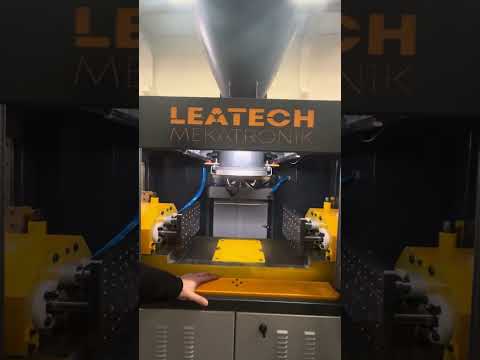
A core shooting machine blows resin-bonded sand into a core box with compressed air and cures it in the box. Cold box machines cure the core at room temperature with amine gas in a few seconds and are the standard for volume production. Shell (Croning) and hot box machines work with heated core boxes: shell suits hollow cores with a fine surface, hot box suits solid, simple cores that need strength.
Pick the process first, then the shot volume, and only then the machine. Get the process wrong and the core boxes, the sand and the auxiliary equipment are wrong too.
The three main processes
- Binder — Cold box: Phenolic resin + isocyanate; Hot box: Liquid furan/phenolic resin + catalyst; Shell (Croning): Pre-coated resin sand
- Curing — Cold box: Amine gas, room temperature; Hot box: Heated box, typically 200-260 °C; Shell (Croning): Heated box, typically 230-300 °C
- Typical cycle — Cold box: 20-60 s; Hot box: 30-90 s; Shell (Croning): 30-120 s, depending on wall thickness
- Core box — Cold box: Metal or resin, unheated; Hot box: Steel or cast iron, heated; Shell (Croning): Steel or cast iron, heated
- Auxiliaries — Cold box: Mixer, gas generator, scrubber; Hot box: Mixer; Shell (Croning): Sand hopper, heating
- Strength — Cold box: Speed, dimensional accuracy; Hot box: Strong cores, simple system; Shell (Croning): Hollow cores, fine surface, long shelf life
- Watch out for — Cold box: Amine odour and environmental permit; Hot box: Energy, fumes; Shell (Croning): Coated sand cost, energy
Inorganic (water-glass based) cores are spreading in aluminium automotive casting. They cut smoke and odour at pouring, but machines and boxes cost more. Large cores in small numbers are still made by hand in no-bake sand rather than on a machine.
Shot volume and machine size
Core shooters are classed by the volume of the shooting head. Typical classes:
- 5-10 litres: small cores for valves and fittings, up to a few kilograms
- 25-60 litres: most automotive and pump cores
- 100-300 litres and above: block, head and large housing cores
Work out shot volume from core weight. Take sand density as roughly 1.4-1.6 kg per litre and add 20-30%. A 12 kg core needs about 8 litres of sand: a 10-litre machine is at its limit, 15-25 litres is comfortable.
After shot volume, check three dimensions: maximum core box size (width × height × depth), parting direction (vertical or horizontal) and clamping force.
What we look at when choosing
- The core list: heaviest and largest core, annual quantity, number of different boxes.
- The metal: cores behave differently in iron, steel and aluminium. In aluminium the core must collapse easily.
- Existing core boxes: do mounting dimensions, ejector system and blow holes fit the new machine?
- Environmental permit: cold box needs an amine scrubber and a stack. Settle the permit question at the start.
- After the machine: core coating (dip or brush), drying oven, core handling and storage.
- Core setting: on a flaskless line, plan who sets the cores, and how, together with the core machine.
Buying a used core shooter
- Wear on the shooting head, blow plate and nozzles
- Sand magazine, valves and seals: does shot pressure hold?
- Play in clamping cylinders and guides
- On heated machines: is plate temperature even across the surface? Measure with thermocouples.
- On cold box: gas generator dosing pump and heater, scrubber condition, and whether the scrubber is included
- Safety: guards, light curtains, emergency stops
- PLC, software backup, electrical and pneumatic drawings
- Are core boxes or box adapters part of the sale?
If you can, see the machine shooting cores. A machine running empty will not show you shot leaks or uneven heating.
FAQ
Cold box or shell? For long runs and solid cores, cold box is faster and cheaper per core. For thin-walled, hollow cores that will be stored for a long time, shell has the edge.
Can one machine run both cold box and shell? Some machines can be built for both, but specify it in the order. Adding heating later is not possible on every machine.
What sand does cold box need? Usually washed, dry silica sand. Wet or dusty sand lowers core strength and raises resin consumption.
What is the delivery time? For a new machine, a few months depending on maker and size. For a used one, a few weeks including dismantling, shipping and installation. Ask for the exact time in writing in the offer.
Related listings and guides
- No core shooters are listed on the site right now. For new or used core machines, request an offer.
- Moulding with cores: Flaskless moulding machines guide
- Recovering core sand: No-bake sand reclamation
- Choosing a sand mixer, Machines needed to set up a foundry
How ZENES helps
ZENES supplies cold box, hot box and shell core shooters, new and used, together with gas generators, scrubbers and the rest of the core shop. Send us your core list and annual quantities. We will settle the process and machine size with you, then compare used European and new-built options on the same scope.